Denver Fence Guys Details Fence Work During Ash Tree Removal
WHEAT RIDGE, CO - September 08, 2026 - PRESSADVANTAGE - Denver Fence Guys has published guidance on fence removal and

Press Release Disclaimer: This is a press release distributed through the XPR Media network. It has not been independently verified by our newsroom.


WHEAT RIDGE, CO – September 08, 2026 – PRESSADVANTAGE –
Denver Fence Guys has published guidance on fence removal and reinstallation for property owners scheduling ash tree work, released as ash removal continues across Front Range communities. The guidance addresses a consequence of tree work that property owners frequently encounter only after a crew has arrived and identified the fence as an obstacle.
The emerald ash borer was first confirmed in Colorado in Boulder in 2013, and the Colorado State Forest Service has since tracked its spread through communities across the northern and western portions of the metropolitan area. Colorado State University Extension has documented ash as a substantial share of the urban canopy in many older neighborhoods, which concentrates removal work in the areas where mature trees most often sit near property lines.
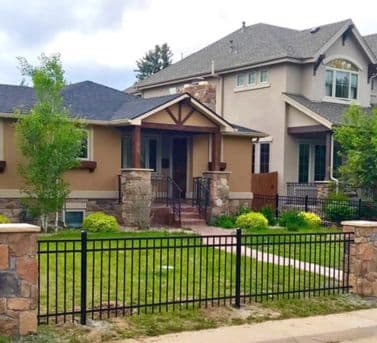
Ash planted along a boundary tends to sit close to the fence by design. Root systems develop around and beneath post footings, and canopies extend over or into panels. When an infested or dead ash requires removal, crews need working space at the base of the trunk and along the intended fall path, and fencing within that zone generally has to come out before cutting begins.
“By the time a tree crew is on site, the fence question has usually already been decided by where the tree is,” said Barrett Pribyl, Owner of Denver Fence Guys. “Answering it a few weeks earlier gives a property owner options that disappear once equipment is in the yard.”
The condition of the existing fence determines what is possible. Older wood that has weathered years of exposure may not survive disassembly intact, since fasteners loosen over time and boards can split at fastener points during removal. Vinyl and composite panels generally handle temporary removal more predictably, though connection hardware becomes less forgiving with age. Fencing installed recently is more likely to come out and go back in as the same material.
Posts introduce a separate consideration. A post set in a concrete footing requires careful extraction, particularly where soil has compacted around the footing over years. Where a footing is removed only partially, pouring new concrete against the remaining material creates a joint rather than a monolithic footing, and that joint becomes the weak point under wind load or soil movement. Removing the footing entirely allows a replacement post to be set at proper depth and alignment.
Grade is easy to overlook. Stump grinding and root extraction disturb the ground along a fence line, and the soil left behind settles differently than undisturbed ground. A fence reinstalled before that settling has occurred can require adjustment later, particularly at the bottom of panels where a gap that was not there at installation opens over the following season.
Access is a further factor. Equipment used for removal and stump grinding has to reach the tree, and on properties where a fence encloses the only route in, the width of a gate determines whether a section of fence has to come out for access even when the tree itself sits clear of the fence line. Properties on corner lots and those with alley access often have more options than interior lots with a single side yard.
Scope varies widely between properties. Some projects involve pulling a single panel and resetting it after the stump is ground. Others require removing several sections, replacing posts, and addressing grade changes across a longer run. An assessment before tree work begins establishes the extent of the fence work rather than leaving it to be determined once a crew is already scheduled.
“The expensive version of this is the one nobody planned,” Pribyl said. “A panel that comes out cleanly on a Tuesday is a different job than a panel that gets damaged on a Thursday.”
Timing coordination reduces the interval a fence line stays open. A gap in a fence affects privacy, pet containment and property security for as long as it remains, and sequencing removal and reinstallation around the tree crew’s schedule keeps that window short. Property owners are advised to document the condition of a fence before any tree work begins, with photographs and measurements, and to confirm coverage questions directly with their insurer, since policy terms vary.
Ash decline also produces fence damage independent of planned removal. Declining ash drop limbs, and a limb landing on a fence run causes damage that is straightforward to identify but can extend beyond the visible break if a post absorbs part of the impact. A run that appears to need only a panel replaced sometimes involves a post that took the load and shifted.
Shared boundaries add a coordination element as well, since a tree on one property frequently sits against a fence that both neighbors use. Establishing who is arranging which portion of the work tends to prevent complications once a schedule is set.
The guidance forms part of a broader effort by the company to address regional conditions affecting fence performance, including expansive clay soils, wind exposure and severe weather.
Denver Fence Guys is a fence contractor founded in 2007, serving residential and commercial properties across the Denver metropolitan area with fence installation, repair and maintenance. The company works with wood, vinyl, composite, ornamental iron, chain link and precast concrete fencing for residential, commercial and homeowner association properties, and provides gate installation and access control systems. Denver Fence Guys is a member of the American Fence Association and backs its installation work with a 10-year workmanship warranty. Each project is assigned a dedicated project manager who oversees planning, scheduling, installation and a final walkthrough.
###
For more information about Denver Fence Guys, contact the company here:
Denver Fence Guys – Wheat Ridge
Barrett Pribyl
+17206062660
barrett@denverfenceguys.com
10509 W 44th Ave unit g, Wheat Ridge, CO 80033, United States
Media gallery