Best Technology Highlights Phosphating Lines for Improved Coating Adhesion and Corrosion Resistance
Custom phosphating systems help manufacturers improve surface preparation, coating adhesion, corrosion resistance, and

Press Release Disclaimer: This is a press release distributed through the XPR Media network. It has not been independently verified by our newsroom.
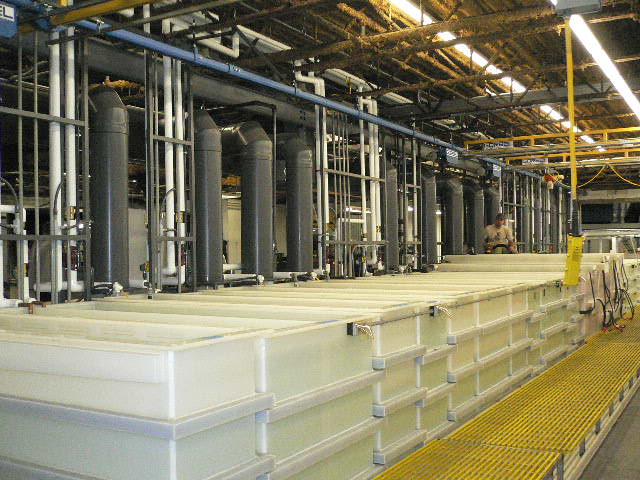

Custom phosphating systems help manufacturers improve surface preparation, coating adhesion, corrosion resistance, and process consistency.
MINNEAPOLIS, MN, UNITED STATES, September 2, 2026 /EINPresswire.com/ — Best Technology is highlighting its custom phosphating lines for manufacturers seeking improved surface preparation, coating adhesion, corrosion resistance, and process consistency before powder coating, painting, and other downstream finishing operations.
A durable finished coating depends heavily on what happens before the coating is applied. Oils, grease, rust, machining residue, particulate, and other contaminants can interfere with surface treatment and contribute to inconsistent adhesion or finishing results.
Phosphating helps address this challenge by chemically modifying the metal surface to form a phosphate conversion coating. Depending on the chemistry and application, the resulting surface can provide a better foundation for subsequent finishing processes while helping support corrosion resistance.
More Than a Phosphate Tank
A phosphate line is a coordinated series of cleaning, rinsing, phosphating, and treatment stages designed around the part material and downstream finishing requirements.
A typical zinc phosphate pretreatment process may include alkaline cleaning, water rinsing, zinc phosphating, and a final water rinse. The cleaning stage removes contaminants that could interfere with phosphate coating formation. Intermediate rinsing helps reduce chemistry carryover, while the final rinse removes residual phosphate chemistry before the next operation.
Controlling the Phosphating Process
Variables such as process time, temperature, chemical concentration, and pH can influence how the conversion coating forms. Equipment may therefore incorporate controlled heating, circulation, filtration, water addition, level monitoring, insulation, and centralized controls to support stable processing conditions.
Best Technology evaluates the complete manufacturing process and configures the cleaning, rinsing, chemistry, controls, and material handling around the required finished result.
Real-World Zinc Phosphate Line Designed for Future Expansion
A recent Best Technology project demonstrates how these requirements come together in a production environment.
The manufacturer required a four-stage immersion system consisting of heated alkaline cleaning, water rinsing, zinc phosphating, and a final water rinse.
The cleaning stage incorporated controlled heating, circulation, filtration, and level monitoring. The zinc phosphate stage included controlled heating, circulation, filtration, water addition, insulation, and level monitoring.
PLC-based centralized controls allow operators to monitor temperatures, adjust settings, review alarms and troubleshooting information, and manage equipment functions from a common interface.
The manufacturer also anticipated adding manganese phosphating in the future. Best Technology designed the line so an additional manganese phosphate stage could later be incorporated between the existing zinc phosphate stage and final rinse.
Zinc and Manganese Phosphate for Different Requirements
Zinc phosphate is commonly used when manufacturers require a phosphate surface that supports coating adhesion and corrosion protection, particularly before painting or powder coating.
Manganese phosphate is generally used when the coating contributes to wear resistance, friction characteristics, or oil retention on ferrous components.
Applications and Automation
For higher-volume operations, Best Technology also designs automated phosphate coating systems that move baskets or racks through cleaning, rinsing, and phosphating stages according to controlled process sequences and dwell times.
Automation can help improve throughput, reduce manual handling, and provide tighter control over processing times and tank sequencing.
Address Pretreatment Problems Before They Affect the Finished Part
Inconsistent adhesion, corrosion performance, or surface preparation can lead to rework, rejected parts, production delays, and added finishing costs.
Best Technology designs custom immersion, spray, manual, semi-automated, and automated phosphating systems around each manufacturer’s parts, chemistry, production requirements, and future process needs.
Talk to an expert about your phosphating or powder coating application.
Availability
Best Technology custom phosphating lines and automated phosphate processing systems are available for new and existing manufacturing applications.
To discuss a phosphate line, powder coat pretreatment process, or changes to an existing surface-preparation operation, contact Best Technology at 612-392-2414.
About Best Technology
Best Technology is a leading provider of precision cleaning and finishing equipment, BestSolv® Engineered Fluids, and automation solutions for the medical device, aerospace, defense, electronics, semiconductor, research, government, and industrial manufacturing industries. Based in Minneapolis, Minnesota, Best Technology partners with manufacturers worldwide to deliver reliable, innovative, and compliant solutions for demanding manufacturing applications.
Patrick O’Malley
Best Technology Inc.
+1 612-392-2414
email us here
Visit us on social media:
LinkedIn
Instagram
Facebook
YouTube
Legal Disclaimer:
EIN Presswire provides this news content “as is” without warranty of any kind. We do not accept any responsibility or liability
for the accuracy, content, images, videos, licenses, completeness, legality, or reliability of the information contained in this
article. If you have any complaints or copyright issues related to this article, kindly contact the author above.

Media gallery