
BrightFocus Foundation’s $330+ Million Bet on High-Risk Science Pays Off, Independent Assessment Finds
Scientists funded by BrightFocus received an average of 8x more follow-on funding, leading to the development of new

Press Release Disclaimer: This is a press release distributed through the XPR Media network. It has not been independently verified by our newsroom.


For the last 53 years, BrightFocus Foundation, a nonprofit dedicated to Alzheimer’s, macular degeneration, and glaucoma research, has been making an unconventional bet. What happens when you give promising and emerging scientists funding to pursue early‑stage, high‑risk research that could lead to major scientific advances and future competitive grants?
This press release features multimedia. View the full release here: https://www.businesswire.com/news/home/20261009502181/en/
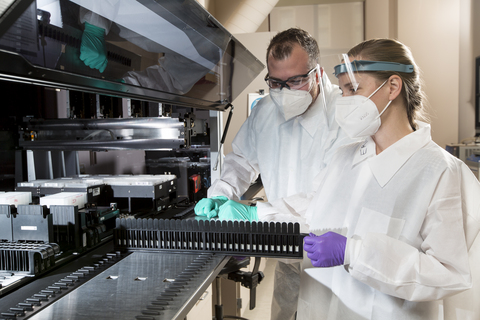
BrightFocus Foundation’s early seed funding helped spark breakthroughs across Alzheimer’s disease, macular degeneration, and glaucoma, paving the way for follow-on support from the National Institutes of Health and other funders and contributing to innovations including the first commercially available blood test for Alzheimer’s disease. Photo courtesy of C2N Diagnostics.
According to an impact assessment commissioned by BrightFocus and conducted by the American Institute of Biological Sciences, and released today, the bet is paying off. Funding from BrightFocus Foundation’s programs—Alzheimer’s Disease Research, Macular Degeneration Research, and National Glaucoma Research—is a grant multiplier, with scientists revealing that this early support unlocks, on average, 8x more follow-on funding from other sources—leading to new treatments, risk reduction strategies, and diagnostic tools in use today.
One pivotal example is the case of C2N Diagnostics, a St. Louis-based company rooted in early BrightFocus funding that supported the development of the first commercially available Alzheimer’s blood test.
“BrightFocus Foundation’s postdoctoral fellowship was pivotal to my development, enabling me to pursue rigorous, high-risk research in neurodegenerative disease,” said Philip B. Verghese, PhD, senior vice president, R&D and laboratory operations at C2N Diagnostics.
“Later, as co-principal investigator with Joel Braunstein, MD, MBA, BrightFocus’ timely support helped launch and accelerate the development of our blood tests at a time when plasma biomarkers for Alzheimer’s disease were not yet widely considered achievable. The funding sustained the work at a critical stage and helped translate the science into clinically available tests, including PrecivityAD® and PrecivityAD2®,” Dr. Verghese added. The latter was recently cleared by the FDA.
Why is this important? With 1 in 5 Americans over 40 afflicted with Alzheimer’s, macular degeneration, or glaucoma, answers to bold “what-if” ideas are laying the foundation of knowledge that could one day lead to cures. BrightFocus’ early support has enabled major breakthroughs, including the discovery of genes involved in hereditary Alzheimer’s, methodologies that allow us to detect brain changes through the eye, and the development of the optical coherence tomography (OCT) imaging test—the gold standard for diagnosing eye diseases like glaucoma and macular degeneration—among many others.
“BrightFocus funding begins with individual, grassroots donors pooling their dollars to force multiply for significantly greater impact,” said Stacy Pagos Haller, president and CEO of BrightFocus Foundation. “We’ve invested over $330 million in research over the past 50+ years with the singular mission of advancing science to find cures for diseases of mind and sight. This assessment shows the extraordinary ripple effect those investments can have for scientists, the millions of people affected by the diseases, and the research community as a whole.”
The funding benefits also extend into building a pipeline of talented scientists for generations to come. BrightFocus grants serve as a powerful catalyst for keeping research scientists in the lab, driving impressive career trajectories and retention in science for over 93% of respondents. As massive disruptions and continued uncertainty in federal research funding lead more U.S. scientists to reconsider their career paths, or even leave the field altogether, ensuring that the scientific community retains expertise and knowledge is essential for future breakthroughs.
Other key findings from the survey, which was successfully delivered to 872 current and past grantees and had a 31% response rate, include:
- Grantees reported publication as the most frequent outcome of their BrightFocus funding (80.8%), with the most common discovery being the identification of new risk factors or disease prevention methods.
- 50-60% of respondents said their grant led to new collaborations in the same field or crossover into another field.
- 8-10% said their grant led to a clinical trial or observational study.
- 7-11% of grantees filed a provisional or final patent or copyright.
- 5-14% of funded projects led to a treatment or assessment protocol.
These findings are particularly relevant at a time when researchers across the U.S. face an increasingly challenging and competitive research funding environment. By providing early support to promising scientists, BrightFocus Foundation helps researchers pursue cutting-edge ideas with great potential to change the trajectory of a disease, generate preliminary findings, and build the track record necessary to compete for larger grants from other funding sources. Learn more about how to support our work.
About BrightFocus Foundation
BrightFocus Foundation is a premier global nonprofit funder of research to defeat Alzheimer’s, macular degeneration, and glaucoma. Since its inception in 1973, BrightFocus and its flagship research programs—Alzheimer’s Disease Research, Macular Degeneration Research, and National Glaucoma Research—has awarded more than $330 million in research grants to scientists around the world, catalyzing thousands of scientific breakthroughs, life-enhancing treatments, and diagnostic tools. We also share the latest research findings, expert information, and resources to empower the millions impacted by these devastating diseases. Learn more at brightfocus.org.
About American Institute of Biological Sciences
The American Institute of Biological Sciences (AIBS) is a nonprofit 501(c)(3) public charitable organization dedicated to the use of science to inform decision making for the benefit of the science and society. Our staff members work to achieve the mission by publishing the peer-reviewed journal BioScience, by providing scientific peer review and advisory services to a wide variety of research organizations, and by collaborating with scientists, students, and institutions to advance public policy, education, and the public understanding of science.
View source version on businesswire.com: https://www.businesswire.com/news/home/20261009502181/en/
Media gallery



