Top Host Cell Residual DNA Detection Kits Manufacturer Strengthens Biopharma Quality Control
SHANGHAI, CHINA, October 9, 2026 /EINPresswire.com/ -- As biopharmaceutical development advances toward more complex

Press Release Disclaimer: This is a press release distributed through the XPR Media network. It has not been independently verified by our newsroom.

SHANGHAI, CHINA, October 9, 2026 /EINPresswire.com/ —
As biopharmaceutical development advances toward more complex biologics, vaccines, viral vectors, and cell and gene therapies, the demand for reliable analytical tools continues to grow. HYQURE Biological Technology Co., Ltd. is positioning its detection-kit portfolio within this evolving market, supporting quality control and biosafety testing throughout the development and manufacturing lifecycle. With its focus on molecular detection technologies and biopharmaceutical testing solutions, the company offers products designed to help laboratories address key analytical needs, including residual DNA assessment, microbial monitoring, and safety-related testing.
Residual DNA Testing Remains a Critical Quality Consideration
Residual host cell DNA is a process-related impurity that may remain after the production of biological medicines. Its potential presence makes effective downstream purification and appropriate analytical testing important elements of a comprehensive quality strategy. Manufacturers need suitable methods to evaluate residual DNA in process intermediates and finished products, with assay selection depending on the production host, sample matrix, manufacturing process, and intended regulatory application.
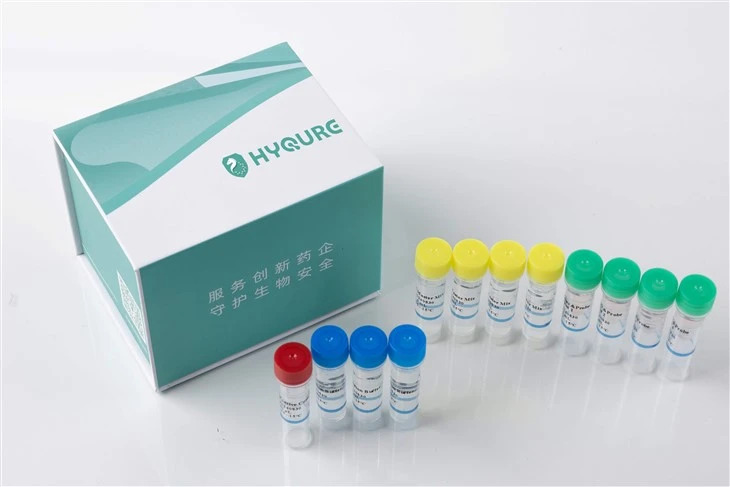
Host Cell Residual DNA Detection Kits are therefore an important category of analytical products for biopharmaceutical quality control. These kits can support the quantification or characterization of residual DNA associated with different production systems. Depending on the assay design, target host, and validated application, testing may contribute to process evaluation, impurity control, product characterization, and documentation prepared for regulatory review.
HYQURE Biological Technology Co., Ltd. offers a range of host cell residual DNA detection products under its HyPrecise® brand. Its portfolio includes detection solutions for host systems such as Chinese hamster ovary (CHO) cells, HEK293 cells, Escherichia coli, Pichia pastoris, Vero cells, and human cells. The company also lists residual DNA fragment analysis products for selected host systems, as well as sample preparation solutions intended to work alongside DNA detection workflows.
These different product options reflect the varied needs of biopharmaceutical manufacturing. Recombinant proteins, monoclonal antibodies, vaccines, and advanced therapy products may rely on different host cells or production platforms. Consequently, a residual DNA assay suitable for one process cannot automatically be assumed to be appropriate for another. Laboratories need to consider target specificity, analytical sensitivity, sample preparation, interference, and the performance characteristics required for their own applications.
Molecular Detection Supports More Informed Quality Decisions
Quantitative polymerase chain reaction (qPCR) is widely used in molecular testing because it can detect specific nucleic acid targets and provide quantitative results when supported by an appropriate assay design and calibration strategy. In residual DNA analysis, a qPCR-based method can help laboratories assess the amount of target DNA in a sample. The suitability of a method depends on factors such as primer and probe specificity, amplification efficiency, sample recovery, and the presence of substances that may interfere with amplification.
HYQURE’s product information describes residual DNA detection kits using fluorescent-probe qPCR methods, together with sample nucleic-acid extraction products. A coordinated approach to sample preparation and detection can be valuable because the reliability of the final result depends not only on the detection reaction, but also on how the sample is collected, processed, and prepared for analysis.
For quality teams evaluating a kit, technical documentation is an essential part of the purchasing decision. Relevant information may include the intended host-cell target, sample types, quantification range, limit of detection, specificity, precision, accuracy, recovery, stability, and recommended operating conditions. Laboratories should also assess whether the available validation or performance-verification data are appropriate for their product and intended use.
A manufacturer’s published specifications provide an initial reference, but they do not replace suitability assessment within the user’s own process. Differences in sample composition, purification steps, and product formulation may affect assay performance. For that reason, buyers commonly review product documentation and, where necessary, conduct method verification or validation before introducing a detection kit into a regulated workflow.
Microbial Detection Kits Address Another Layer of Quality Control
Residual DNA is only one part of a broader analytical and biosafety framework. Microbial contamination is a separate concern that can affect raw materials, cell cultures, manufacturing operations, and biological products. The appropriate microbial testing strategy depends on the product type, production process, risk assessment, and applicable quality requirements.
HYQURE Biological Technology Co., Ltd. also provides Microbial Detection Kits for customers working in biopharmaceutical research and quality control. The company’s broader detection portfolio includes molecular approaches for microbial testing, such as products related to mycoplasma detection and bacterial or fungal DNA analysis. These types of assays can support laboratories seeking targeted analytical methods for microbial monitoring, subject to the specific scope and performance characteristics of each product.
Mycoplasma testing is particularly relevant in cell culture-based manufacturing and cell-related research because contamination may be difficult to identify through routine visual inspection. Molecular testing can offer a targeted approach for detecting selected microbial genetic material, while other methods may be required depending on the applicable pharmacopoeial requirements or validated testing strategy.
When comparing Microbial Detection Kits, laboratories should review the organisms or targets covered, the sample matrices for which the method is intended, the testing workflow, controls, and the interpretation of positive or negative results. They should also consider how the kit fits into the facility’s existing environmental monitoring, raw-material testing, cell-bank testing, and product-release procedures.
The role of a detection kit is to provide evidence within a larger quality system. No single assay should be assumed to detect every possible contaminant or replace other required testing. Instead, laboratories can use appropriately selected methods as components of a risk-based program designed to identify relevant quality concerns and support consistent decision-making.
Safety Detection Kits for Biopharmaceutical Applications
The development of viral vectors, cell therapies, gene therapies, and other advanced biological products has increased the need for specialized analytical testing. Depending on the therapeutic platform, manufacturers may need to evaluate product identity, biological activity, process-related risks, and potential safety concerns associated with the production system.
HYQURE Biological Technology Co., Ltd. offers Safety Detection Kits as another part of its testing-related product range. Its broader safety portfolio includes assays associated with viral and gene-therapy applications, such as testing for replication-competent viral contaminants and selected viral-related analytical targets. The exact application and suitability of each kit depend on the product specification and the requirements of the intended testing program.
For biopharmaceutical developers, safety testing often involves multiple complementary methods rather than one universal assay. A testing plan may include cell substrate characterization, microbial testing, residual impurity analysis, and specialized viral safety assessments. The choice of method should reflect the biological system, manufacturing process, stage of development, and relevant regulatory expectations.
Safety Detection Kits can be evaluated according to their target, assay principle, controls, analytical performance, and available documentation. Laboratories should establish whether a product is intended for research, process development, quality control, or a particular regulated application. They should also confirm whether additional method validation, qualification, or transfer activities are required before using the assay to support formal quality decisions.
By offering residual DNA, microbial, and safety-related detection products, HYQURE provides customers with access to several categories of analytical tools through one supplier. This breadth may simplify initial product evaluation for laboratories that need to coordinate different types of testing, although each assay must still be assessed independently for its intended purpose.
Quality Systems and Documentation Matter to Buyers
Biopharmaceutical customers evaluate detection-kit suppliers on more than the basic availability of products. They may also consider manufacturing controls, product consistency, technical support, documentation, supply arrangements, and the supplier’s ability to respond to application-specific questions.
HYQURE’s website describes its work in biosafety and analytical support for large-molecule drugs and cell and gene therapies. The company reports serving biopharmaceutical clients and supporting development and regulatory programs. It also outlines quality-system and laboratory capabilities associated with its operations. Prospective customers should review the company’s current documentation and confirm the scope of any relevant certifications, accreditations, audits, and product-specific performance records before making qualification decisions.
For detection-kit procurement, useful questions include whether the product has a clearly defined intended use, whether its performance specifications match the laboratory’s analytical needs, and whether technical documents are available for internal review. Buyers may also want to clarify storage requirements, shelf life, kit configuration, control materials, shipping conditions, and support for troubleshooting or method transfer.
Consistency across reagent lots is another practical consideration. A kit may perform well during an initial evaluation, but routine implementation requires appropriate controls and procedures to monitor performance over time. Laboratories should follow the manufacturer’s instructions and establish acceptance criteria consistent with their quality system and applicable requirements.
Regulatory expectations can differ by jurisdiction and product category. A supplier’s general quality credentials should not be interpreted as automatic approval of every kit for every application. Instead, customers should establish the specific regulatory status and documentation relevant to the assay, product, and market in which it will be used.
Supporting Different Stages of Biopharmaceutical Development
Analytical requirements can change as a biological product progresses from early research to process development, clinical manufacturing, and commercial production. Early-stage teams may prioritize feasibility and understanding of process-related impurities, while later-stage manufacturing operations generally require more formalized procedures, documented performance, and controlled implementation.
Residual DNA detection may support the characterization of production processes and the assessment of purification performance. Microbial testing can contribute to contamination-control strategies, while specialized safety assays may address risks relevant to viral vectors or advanced therapy platforms. These applications are distinct, but together they form part of a broader effort to maintain product quality and patient safety.
HYQURE Biological Technology Co., Ltd. serves this market through a combination of detection kits and biosafety-related services. For customers considering its Host Cell Residual DNA Detection Kits, Microbial Detection Kits, and Safety Detection Kits, the next step is to match each product to the target, sample type, analytical objective, and level of evidence required. Reviewing the latest technical documents with the supplier can help determine whether a particular kit is appropriate for the intended workflow.
As biopharmaceutical manufacturing continues to evolve, demand for specialized analytical tools is likely to remain closely linked to the complexity of biological production platforms and the need for documented quality control. Suppliers that provide clear product information, appropriate technical support, and a portfolio aligned with different testing needs can play a useful role in helping laboratories develop robust analytical programs.
About HYQURE Biological Technology Co., Ltd.
HYQURE Biological Technology Co., Ltd. is a biotechnology company based in Jiashan, Jiaxing, Zhejiang, China, with a focus on biosafety and analytical solutions for biopharmaceuticals, large-molecule drugs, and cell and gene therapies. Under its HyPrecise® brand, the company offers testing-related products including Host Cell Residual DNA Detection Kits, Microbial Detection Kits, Safety Detection Kits, and Host Cell Residual Protein Detection Kits. Its broader services include selected biosafety testing, cell-bank characterization, viral safety assessment, and analytical support for biopharmaceutical development. For more information about its product range, technical specifications, and services, visit the official website at www.hyqure.com.
Address: Building 18, Lane 2777 East Jinxiu Road, Pudong New Area, Shanghai, China
Official Website: https://www.hyqure.com/
Peng Junhao
HYQURE Biological Technology Co., Ltd.
service@hyqure.com
Legal Disclaimer:
EIN Presswire provides this news content “as is” without warranty of any kind. We do not accept any responsibility or liability
for the accuracy, content, images, videos, licenses, completeness, legality, or reliability of the information contained in this
article. If you have any complaints or copyright issues related to this article, kindly contact the author above.

Media gallery