Where Portugal’s Golden Visa funds invest: A map of 26 publicly disclosed companies
Movingto reports that six Golden Visa-linked funds disclosed 26 companies, mostly headquartered in Portugal, mainly in

Press Release Disclaimer: This is a press release distributed through the XPR Media network. It has not been independently verified by our newsroom.

D. Prameswara // Shutterstock
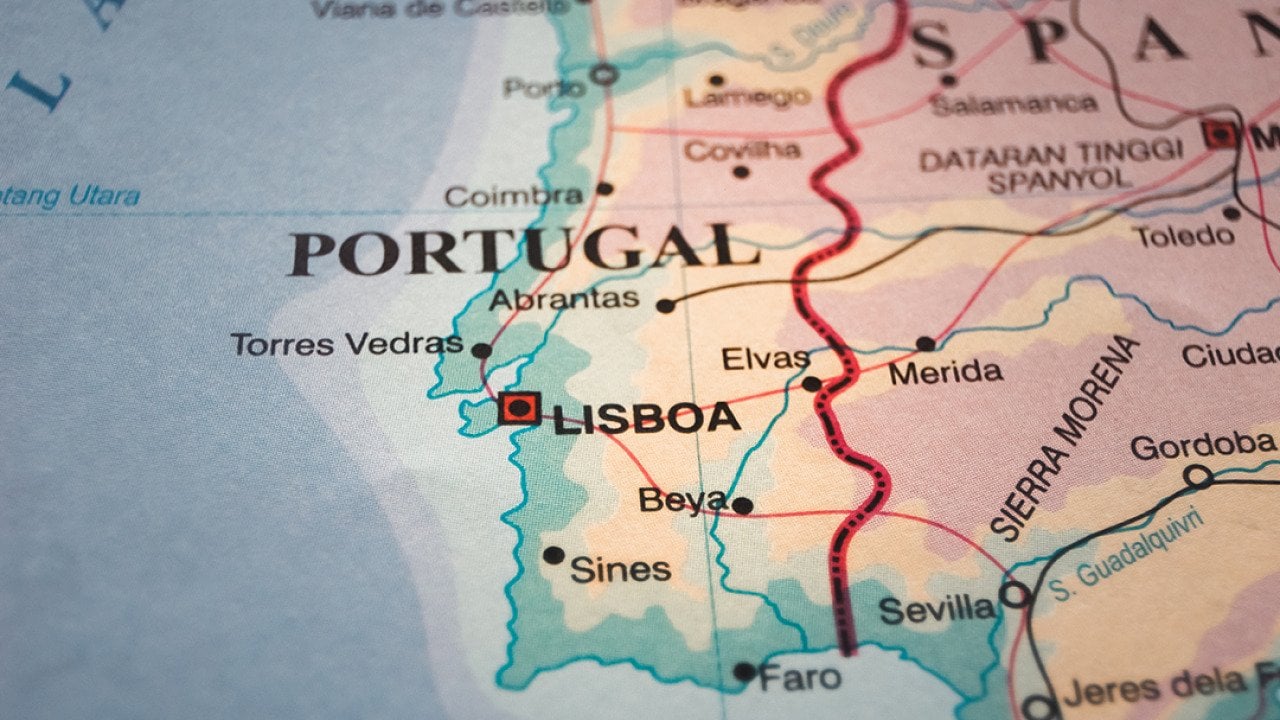
Where Portugal’s Golden Visa funds invest: A map of 26 publicly disclosed companies
Six Golden Visa-linked fund disclosures named 26 underlying companies. Twenty-three have Portuguese headquarters, led by 15 in Lisbon district. The sample measures transparency—not the whole market or the amount invested in each place.
Portugal’s Golden Visa fund market is usually described in broad labels: venture capital, private equity, energy, debt, or technology. Public reports sometimes let investors look one layer deeper and see the businesses behind those labels.
Movingto reviewed public fund reports, factsheets, manager announcements, and government disclosures. The disclosure sample spans six exact funds. Together, the documents contained 33 fund-company relationships and 26 unique company names. Twenty-three of those companies have headquarters in Portugal.
The map is limited to what the public record reveals. It does not cover every Golden Visa fund or trace every euro invested. The disclosure dates range from Dec. 31, 2024, to May 31, 2026. Some sources show direct private-company investments, while others show listed shares or corporate bonds. A security holding gives a fund exposure to a company. When that security is bought in the secondary market, the purchase price goes to the seller rather than the business.
This is general information, not legal, tax, or investment advice.
1. The disclosed headquarters map
Lisbon district accounted for 15 of the 23 Portuguese-headquartered companies in the sample, or 65%. Porto followed with five, Coimbra had two, and Aveiro had one.
Movingto checked the current registered or stated headquarters of each Portuguese company against company, government, or corporate-record sources, then assigned the district containing that municipality. This avoids treating a project site, office, or the broader “location” field in an investment disclosure as a headquarters. Even so, the map does not locate factories, branches, projects, employees, or customers. A Lisbon-headquartered utility or bank can finance and operate assets across the country.
The result is also shaped by which funds publish company names. Daily-valued securities funds tend to reveal issuers more consistently than private funds reveal investees. Movingto assigned one principal sector group to each Portuguese company. Biotechnology and food technology are combined, as are industry and infrastructure, so the chart and company list use the same six groups.
Portuguese companies by headquarters district
- Lisbon: 15 companies, or 65%
- Porto: 5 companies, or 22%
- Coimbra: 2 companies, or 9%
- Aveiro: 1 company, or 4%
Portuguese companies by principal sector
- Financial services: 6
- Energy and utilities: 5
- Consumer and communications: 4
- Biotech and foodtech: 4
- Industry and infrastructure: 3
- Forestry and materials: 1
The three companies outside Portugal were Savannah Resources in the United Kingdom, Semilleros La Sala in Spain, and Spot Ship in the United Kingdom. They are listed separately because Portuguese law does not require every euro in an eligible fund to be invested in Portugal.
2. The private-company disclosures reach four districts
The most geographically varied disclosure came from a Banco Português de Fomento report. It named four beneficiaries of the IMGA Futurum Tech fund and reported a broader “location” field for each. For the headquarters map, Movingto checked current company and corporate-record sources instead.
Those sources place Valvian in Lisbon, Immunethep in Cantanhede, Sustainable Food Products in Matosinhos, and Insect Based Feed & Food in Lousã. The BPF report classified the first two as biotechnology and the other two as food engineering. It recorded 7.95 million euros of total fund investment across the four companies.
The Growth Blue fund added a fifth private Portuguese company to the map. In May 2026, NBS Water Engineering announced Growth Blue’s investment, and Portugal’s Competition Authority described the transaction as an acquisition of joint control. NBS states that its headquarters are in Aveiro and that it designs, builds, and operates water and wastewater infrastructure.
Growth Blue’s 2025 sustainable-blue-finance report also named an investment in Semilleros La Sala, a Spanish fruit-and-vegetable plant nursery. It sits outside the Portugal district count.
3. Listed shares and bonds pull the map toward Lisbon
Three securities funds supplied most of the names in the sample. The Heed Top October 2025 factsheet listed its 10 largest individual issuers. They included Caixa Geral de Depósitos, Novo Banco, EDP, Crédito Agrícola, Galp, Greenvolt, Banco Comercial Português, Floene, Banco Montepio, and Brisa Concessão Rodoviária.
The Optimize Portugal Golden Opportunities factsheet dated May 31, 2026, supplied another top-10 list. Mota-Engil, Banco Comercial Português, CTT, Jerónimo Martins, Sonae, REN, EDP, NOS, Savannah Resources, and Semapa appeared there.
The 3CC Portugal Golden Income Fund’s 2024 annual report named six Portuguese bond issuers: EDP, Galp, Banco Comercial Português, Caixa Geral de Depósitos, Fidelidade, and Novo Banco. Five already appeared in the Heed disclosure, so only Fidelidade increased the unique-company count.
The overlap matters. This is 33 disclosed fund-company positions, but 26 companies after deduplication. It also shows that funds with different labels can expose investors to the same large Portuguese issuers.
All 26 unique companies in the disclosure sample
- Banco Comercial Português — Porto — Financial services — Heed Top; Optimize; 3CC
- Banco Montepio — Lisbon — Financial services — Heed Top
- Brisa Concessão Rodoviária — São Domingos de Rana, Lisbon — Industry and infrastructure — Heed Top
- Caixa Geral de Depósitos — Lisbon — Financial services — Heed Top; 3CC
- Crédito Agrícola — Lisbon — Financial services — Heed Top
- CTT — Lisbon — Consumer and communications — Optimize
- EDP — Lisbon — Energy and utilities — Heed Top; Optimize; 3CC
- Fidelidade — Lisbon — Financial services — 3CC
- Floene — Lisbon — Energy and utilities — Heed Top
- Galp — Lisbon — Energy and utilities — Heed Top; 3CC
- Greenvolt — Porto — Energy and utilities — Heed Top
- Immunethep — Cantanhede, Coimbra — Biotech and foodtech — IMGA Futurum Tech
- Insect Based Feed & Food — Lousã, Coimbra — Biotech and foodtech — IMGA Futurum Tech
- Jerónimo Martins — Lisbon — Consumer and communications — Optimize
- Mota-Engil — Porto — Industry and infrastructure — Optimize
- NBS Water Engineering — Aveiro — Industry and infrastructure — Growth Blue
- NOS — Lisbon — Consumer and communications — Optimize
- Novo Banco — Porto Salvo, Lisbon — Financial services — Heed Top; 3CC
- REN — Lisbon — Energy and utilities — Optimize
- Semapa — Lisbon — Forestry and materials — Optimize
- Sonae — Maia, Porto — Consumer and communications — Optimize
- Sustainable Food Products — Matosinhos, Porto — Biotech and foodtech — IMGA Futurum Tech
- Valvian — Lisbon — Biotech and foodtech — IMGA Futurum Tech
- Savannah Resources — United Kingdom — Mining — Optimize
- Semilleros La Sala — Spain — Horticultural plant nursery — Growth Blue
- Spot Ship — United Kingdom — Maritime software — Ventures.eu Fund I
4. A named holding does not trace every euro
A named holding proves that a fund disclosed exposure to a company on a particular date. It cannot show that all subscriptions financed that company, that a Golden Visa investor’s exact 500,000 euros can be traced to it, or that the company received the purchase price as new capital.
The distinction is clearest with listed shares and bonds. If a fund buys an existing security from another investor, cash changes hands in the secondary market. The issuer may have benefited when the security was originally issued, but it does not receive the fund’s later purchase price directly. A private-equity transaction can also fund a company, buy shares from existing owners, or combine both.
For that reason, this analysis maps named portfolio exposure. The economic destination of every euro remains unknown. Manager-wide portfolio companies were excluded unless a public source tied them to the exact fund reviewed.
5. What the public record still hides
Private funds do not publish holdings in a standard format. Some managers name every investee, others reveal only sectors or selected case studies, and some reserve full portfolio reporting for investors. The six funds in this analysis were included because a public source tied company names to the exact vehicle. Silence elsewhere does not mean a fund has no investments.
The source dates are also uneven. A Dec. 31, 2024, annual report and a May 31, 2026, factsheet are not simultaneous portfolio snapshots. Companies may have entered or left a fund after the stated date. The map therefore answers a narrow question: Which companies could be verified from the public record available on July 21, 2026?
The biggest missing field is comparable investment value. Some sources gave percentages, some euro amounts, and others only company names. Combining them would create false precision. District and sector totals in this article count unique companies once, regardless of position size.
Why 3 disclosed companies sit outside Portugal
AIMA’s current guidance says the fund route requires a capital transfer of at least 500,000 euros into units of a non-real-estate collective investment undertaking created under Portuguese law. At the time of investment, the vehicle must have a maturity of at least five years, and at least 60% of the investment value must be invested in commercial companies headquartered in Portugal.
The 60% threshold is a value test at fund level, so some holdings can sit outside Portugal. The 23-to-three company split in this sample cannot be compared directly with that legal threshold because the counts are not weighted by position value.
Law 56/2023 also says the remaining qualifying investment activities cannot be directed, directly or indirectly, toward real-estate investment. Investors should ask counsel to verify the current vehicle, legal documents, portfolio rules, and immigration evidence rather than infer eligibility from a map or a marketing label.
Methodology and source notes
Inclusion required a public report, factsheet, government disclosure, or manager announcement that tied a company name to one of the six exact funds. Manager-wide portfolio pages were excluded unless the source named the exact vehicle. Each company was deduplicated across funds, assigned one principal sector, and mapped to its registered or stated headquarters—not to project sites, offices, or asset locations. Counts are unweighted and cannot be used to test the legal 60% investment-value threshold.
This story was produced by Movingto and reviewed and distributed by Stacker.